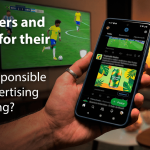


In 2024, ads featuring the face and voice of footballer Lionel Messi circulated on social media promoting an investment app. The video was fake, built by artificial intelligence from a real interview with the athlete. Since then, similar cases have multiplied, with fabricated videos of other athletes, journalists, and actors.
Episodes like these reveal the risks embedded in AI-related technologies. There is no denying the upside: campaigns in which a personality appears speaking, in their own voice and in several languages, such as the 2019 anti-malaria campaign featuring David Beckham, can deliver remarkable results. Yet the same increasingly capable tools can also be used in fraud that exploits another person’s image and a brand’s credibility. For companies operating in Brazil, understanding where the line falls is a practical concern, not a theoretical one.
Generative AI and deepfakes: what they are
Generative artificial intelligence refers to systems that can create or significantly modify text, images, audio, video, or code from user prompts. This is, broadly, the definition guiding the Brazilian AI bill currently under discussion in Congress.
Deepfakes are a specific application of that technology: audiovisual content that reproduces the faces and voices of real people so convincingly that it appears authentic. Technically, they are usually generated by neural networks that compete with one another, one producing the content and the other assessing how convincing it is, until the result becomes almost indistinguishable from a genuine recording.
Originally used in entertainment and special effects, the tool has also come to be employed in scams, false endorsements, and the impersonation of public figures.
The problem, then, is not the technology itself but its use. Recreating someone’s image without authorization, to sell a product or run a scam, is unlawful, whether the person is alive or not, and whether the scene is real or entirely synthetic.
Image is a right (and an asset) protected by law
In Brazil, a person’s image is protected on two levels. The Federal Constitution treats image, honor, intimacy, and private life as inviolable and guarantees compensation for their violation (Article 5, items V and X). The Civil Code (Law No. 10,406/2002) sets out the so-called personality rights (Articles 11 to 21); Article 20, specifically, prohibits the disclosure of writings, the transmission of speech, and the use of a person’s image when these affect their honor or are intended for commercial purposes without authorization.
There is a decisive point for anyone working in marketing. Under Súmula 403 of the Superior Court of Justice (STJ), a consolidated statement of that court’s case law, the unauthorized use of a person’s image for economic purposes triggers a duty to compensate regardless of proof of harm. The damage is presumed.
The court recognizes that image has a dual dimension, both moral and economic, and that being a public figure does not mean waiving this right. The fact that someone posts their own photo on social media does not authorize third parties to profit from it, and authorization granted for one purpose does not automatically extend to other media or uses.
This logic applies to synthetic content. A video that recreates the face and voice of a real person still exploits that person’s identity, even if the scene never took place.
Advertising campaigns with synthetic faces and voices
The most direct risk for a company arises when AI recreates, without authorization, the image or voice of a celebrity, an influencer, or even an ordinary person for a campaign. The protection under Article 20 of the Civil Code expressly covers the transmission of speech, so cloning someone’s voice is as sensitive as reproducing their face.
The risks do not stop at image rights. If the piece evokes a competitor’s visual identity or brand ambassador, it may amount to unfair competition and parasitic exploitation of another’s reputation. When a deepfake appropriates a famous brand to draw attention or associate it with negative contexts, the rules protecting highly renowned trademarks come into play, curbing both dilution and free-riding on reputation.
A caveat is in order: the mere incidental appearance of a branded product in a scene, without suggesting sponsorship, will rarely constitute infringement. The problem arises when there is an implication of endorsement or commercial gain. And from an advertising standpoint, a piece that misleads consumers also runs afoul of the industry’s self-regulation system, overseen by CONAR (Brazil’s advertising self-regulation council), which requires advertising to be truthful and identifiable as such.
Athletes, the World Cup, and ambush marketing
Major sporting events make all of this more acute. During the World Cup, the temptation grows to place a star player or the national team in a campaign through AI, without a contract. The General Sports Law (Law No. 14,597/2023) treats an athlete’s image as a right that can only be exploited under a contractual arrangement (Article 164) and prohibits undue advertising gain obtained through artifice or subterfuge, without the rights holders’ authorization (Article 160, paragraph 5). The same law criminalizes the misuse of the symbols of sports organizations (Article 168) and ambush marketing by association or by intrusion (Articles 170 and 171).
Recreating a player through AI to suggest endorsement of a product therefore combines three fronts of risk: the athlete’s image rights, the rights of the sports entity, and the prohibition on ambush marketing.
Fraud, false endorsements, and platforms
The other side of the problem is the company under attack. In October 2025, a police operation dismantled a scheme that reportedly moved up to R$210 million using deepfakes of influencers and celebrities to sell nonexistent products. Studies indicate that false AI-generated content more than tripled between 2024 and 2025, and that most of it exploits the image or voice of well-known people. False endorsements, cloned profiles, and fraudulent ads erode the trust and reputation built over years.
Here the defense combines image rights, trademark protection, and the liability of intermediaries. The misuse of trademarks in digital environments is a recurring theme, one we have explored in the misuse of trademarks on digital platforms and the impact of social media on brand management. The liability of platforms for third-party content is being redefined following the ruling by Brazil’s Federal Supreme Court (STF) on Article 19 of the Internet Civil Framework (Marco Civil da Internet, Law No. 12,965/2014), which we examine in a dedicated article. Part of the legal scholarship also argues for strict liability of those who profit from the circulation of such content, although the matter remains under debate.
A shifting regulatory landscape and what to do now
Brazil does not yet have a law specifically addressing deepfakes. The Legal Framework for Artificial Intelligence (Bill No. 2,338/2023) was approved by the Federal Senate in December 2024 and is currently before the Chamber of Deputies. Inspired by the European model, it classifies systems by level of risk and provides for transparency duties. In the European Union, the AI Act already requires the labelling of AI-generated content, a rule that takes effect in August 2026. In the field of copyright and AI, the debate over model training and AI-generated works is likewise advancing, as illustrated by the GEMA vs. OpenAI case.
While regulation matures, a few practical measures already reduce exposure:
- Formalize image and voice authorizations with a clear scope of use, media, and term, especially in campaigns that rely on AI.
- Monitor social media, marketplaces, and ads for misuse of your brand and the image of your ambassadors, bearing in mind that trademark registration is the starting point, not the endpoint, of protection.
- Preserve evidence (screenshots, links, and dates) as soon as you identify a deepfake, since it supports cease-and-desist notices and any future litigation.
- Act quickly, combining out-of-court notices, takedown requests to platforms, and, where necessary, judicial measures.
- Review advertising contracts to expressly address the use, or prohibition, of AI recreations.
How Ricci can help
At Ricci Intellectual Property, we follow closely the intersection of artificial intelligence, image rights, and brand protection. Our team advises companies, including foreign businesses operating or planning to operate in Brazil, on structuring safe campaigns, monitoring misuse, and defending their assets against emerging digital fraud. Get in touch at riccipi.com.br.