

In May 2025, the São Paulo Court granted a preliminary injunction in favor of Jack Daniel’s, ordering the suspension of sales of the Brazilian whiskey “Jackzinho.” The reason: alleged trademark infringement. Although still provisional, the decision reignites a recurring debate in the field of intellectual property: how far can one draw inspiration from well-known brands without crossing the line into infringement?
In this article, we explain the legal foundations behind the case, the relevant concepts—such as unfair competition and trade dress—and why it is essential to seek specialized guidance when developing or protecting a trademark in Brazil.
Understanding the Jackzinho Case
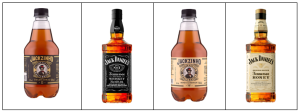
“Jackzinho” is a Brazilian whiskey produced by the Santa Catarina-based company Vila Romana Bebidas Ltda. According to the plaintiff’s claims, the name, typography, and use of certain visual elements on the label allegedly reproduced word marks, mixed marks, and figurative marks owned by the company, evoking the famous Jack Daniel’s brand—one of the most globally recognized names in the alcoholic beverage sector.
Jack Daniel’s Properties, Inc., the owner of the American brand Jack Daniel’s, filed a lawsuit (case no. 1028857-59.2025.8.26.0100, pending before the 2nd Business and Arbitration Disputes Court of the Central Court of São Paulo), alleging trademark infringement, unfair competition, and parasitic advertising of a reputation built over decades.
In a preliminary injunction (and therefore a provisional, non-final decision), the court found the plaintiff’s claims to be plausible and ordered the suspension of the use of the “Jackzinho” brand—or any other that reproduces or imitates, in whole or in part, the plaintiff’s trademarks—until a final ruling is issued.
The case is still in its early stages. The defendant has already filed a response challenging the plaintiff’s arguments of trademark infringement, claiming that it has restyled its labels and changed the expressions used on them, so that its current products differ substantially from those marketed by the plaintiff. The defendant also stated that it has filed a trademark registration request for “JACKZINHO” with the Brazilian Patent and Trademark Office (INPI).
Trademark Infringement and Trade Dress
According to Brazilian Industrial Property Law (Law No. 9,279/1996), a registered trademark grants the holder the exclusive right to use it throughout the national territory. This means that third parties may not use identical or similar marks on products or services in ways that could confuse consumers.
Protection is not limited to registered names and logos—it also extends to the overall image of a product, known as trade dress. This protection aims to prevent lesser-known brands from improperly capitalizing on the reputation of well-established brands through visual or phonetic imitation.
In the case of Jackzinho, it is not merely a matter of phonetic similarity to Jack Daniel’s. According to the court, the label’s color and typography suggest an attempt to create a direct association with a well-known brand.
The Principle of Distinctiveness and the Risk of Confusion
For a trademark to fulfill its main function—identifying and distinguishing products or services in the market—it must be distinctive. When this distinctiveness is undermined by imitations or improper associations, not only are consumers misled, but the value of the original brand is diluted.
In Brazilian courts, the “likelihood of confusion” criterion is widely used when analyzing infringement cases. If there is a possibility that the average consumer may be misled about the origin of a product or service, protection of the original trademark takes precedence.
Moreover, the use of signs similar to those of well-known trademarks—such as Jack Daniel’s—may constitute infringement even when the products or services in question are not identical. Fame, prestige, and reputation expand legal protection precisely to prevent improper associations with the original brand’s reputation.
Unfair Competition and Parasitic Advertising
Another important aspect of the lawsuit filed by Jack Daniel’s is the allegation of unfair competition, which is defined by law as the act of “using fraudulent means to divert someone else’s clientele for one’s own benefit or that of others.”
In the context of Jackzinho, the court found indications—albeit in a preliminary assessment—that the marketing strategy aimed to attract consumers by leveraging the recognition of the American brand. This type of conduct is often classified as parasitic advertising: a practice in which a brand attempts to benefit from another’s reputation and advertising investments without any legitimate connection between them.
The Importance of Trademark Registration
It’s always worth remembering that full legal protection of a trademark is only guaranteed after it is registered with the Brazilian Patent and Trademark Office (INPI). Registration ensures exclusive rights of use and is the first step in defending a brand against imitation.
Many companies make the mistake of launching products without first conducting a viability search for the brand or seeking specialized legal advice. This can lead to financial losses, damage to reputation, and even the forced withdrawal of the product from the market. For these reasons, choosing and protecting a name, logo, or visual identity must be a strategic decision—one that is legally well-founded.
Protecting Your Brand Is Protecting Your Business
Poorly planned branding strategies can lead to lawsuits, bans, and reputational damage. Drawing inspiration from well-known brands may seem advantageous in the short term, but it is a risky and legally unsustainable path. On the other hand, well-registered, distinctive, and legitimately built brands tend to establish themselves more sustainably in the market.
Given the complexity involved in trademark registration, protection, and enforcement, having the specialized legal guidance of Ricci Propriedade Intelectual makes all the difference. The firm’s team works strategically to ensure that brands are created securely and properly protected. In an increasingly competitive market, protecting your brand means safeguarding your investment, your relationship with consumers, and your company’s identity.